

Anchor text is the clickable text in a hyperlink that directs users to another webpage. It plays a crucial role in search engine optimization (SEO) by helping search engines understand the context of the linked content. Well-optimized anchor text also enhances user experience (UX). According to a study by Moz, anchor text influences about 15% of the ranking algorithm.
From a crawlers perspective Anchor text and the surrounding n-grams are an efficient way to quickly analyse a pages context within the hierarchy of a site. So this is used in indexing and should be considered in your SEO.
What is Anchor Text?
Anchor text is the visible, clickable text in a hyperlink and comes in various forms:
- Exact Match: Matches the target keyword exactly (e.g., “best running shoes”).
- Partial Match: Includes variations of the target keyword (e.g., “top-rated running shoes”).
- Branded: Uses a brand name (e.g., “Nike”).
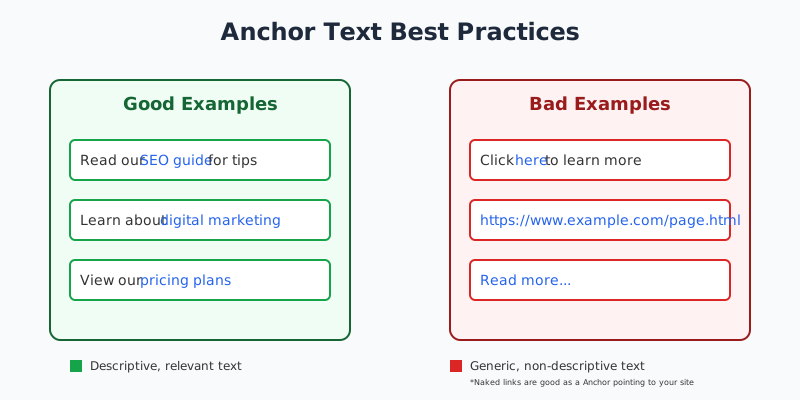
- Generic: Non-specific terms (e.g., “click here”).
- Naked Links: The URL itself (e.g., “www.example.com“).
Using exact match anchor text can increase the likelihood of ranking for the targeted keyword by up to 30% as per older studies. As you are essentially spreading your brand across the web and associating it with the term you wish to rank for.
With that said matching anchors to the intent of the page is paramount, if you mislabel too many anchors the anchor signal will be diminished on your site by algorithms. Instead consider the core entity (thing) and attribute of the page and use that as an anchor, so for example for this very blog you might use anchors like:
- Anchor Text
- Guide on Anchor Text
- Anchor Text Best Practices
- Best Anchor Text
Importance of Anchor Text in SEO
Anchor text signals to search engines the context and relevance of the linked page, impacting click-through rates (CTR). A study by Backlinko found that pages with optimized anchor text had a 25% higher CTR compared to those without. Furthermore Anchor Text is used in the indexing process along with surrounding n-grams to more efficiently process page information.
Best Practices for Using Anchor Text
- Be Descriptive and Relevant: Use phrases that accurately reflect the linked content. Avoid vague terms like “click here” and be consistent and assign 1 keyword group per page which is made up of an entity and attribute.
- Diversify Your Anchor Text: Use a mix of different types to prevent over-optimization and to cover different wording searchers might use. But to not veer to far semantically, so for benefits you might use anchors with pros, good, best, improved, effective etc.
- Limit Exact Match Anchor Text: While beneficial, overusing exact match anchors in your overall link profile can lead to penalties. Maintain a balanced approach, consider that naturally you would get more links to your homepage or for your brand name.
- Use Internal Linking Strategically: Internal links enhance navigation, UX and distribute page authority. But try to place them only where it makes sense and where it fits semantically. Also consider main menu pages will carry more link weight so if you want to promote a new blog link to it from a main page.
- Monitor and Update Anchor Text Regularly: Regular reviews ensure relevance and effectiveness. Tools like Google Search Console can help track performance, click on links in the sidebar menu and find the internal link data. This shows you the most prominent pages in your site hierarchy.
Common Mistakes to Avoid
- Over-optimization of Anchor Text: Too many exact match anchors can trigger penalties if they dominate your overall link profile
- Ignoring the Context of the Linked Page: Ensure relevance between anchor text and linked content.
- Using the Same Anchor Text Repeatedly: Lack of diversity can negatively impact SEO, but it is all within the context of your link profile and is relative to the total amount of links you have. For example, lets say you go and buy 50 links on a brand new website all with exact match anchors. Does that appear natural or like you are violating googles guidelines?
Overall, anchor text is vital for SEO and user experience. By implementing best practices—being descriptive, diversifying anchor text, being consistent and monitoring performance—you can enhance your website’s SEO and improve user engagement.

